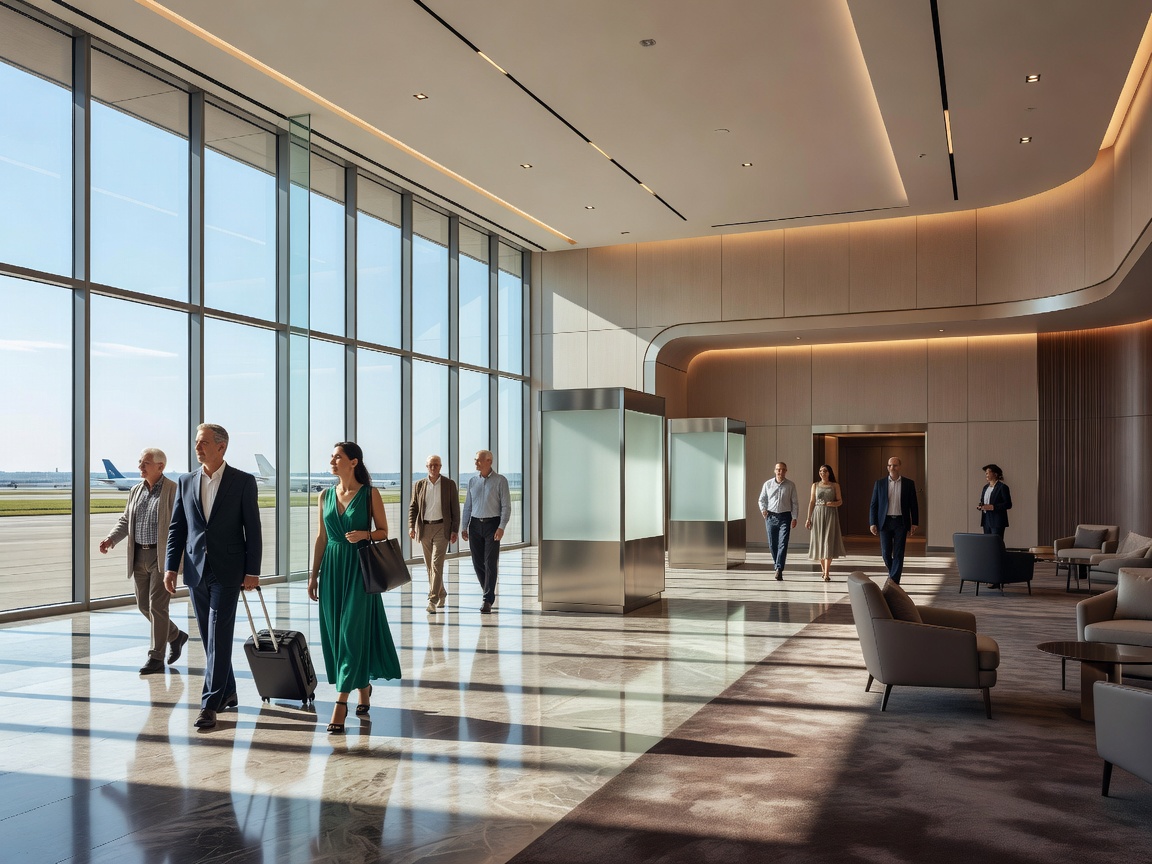
Make the next step legible
Three priorities: a recognisable welcome, an unobstructed route and clear access to assistance.
A premium lounge is not a single room with a single mood. It is a sequence of transitions: arrival, orientation, concentration, restoration and hospitality. Thoughtful design helps each passenger find the next useful place without confusion or unnecessary interruption.
Explore the passenger journey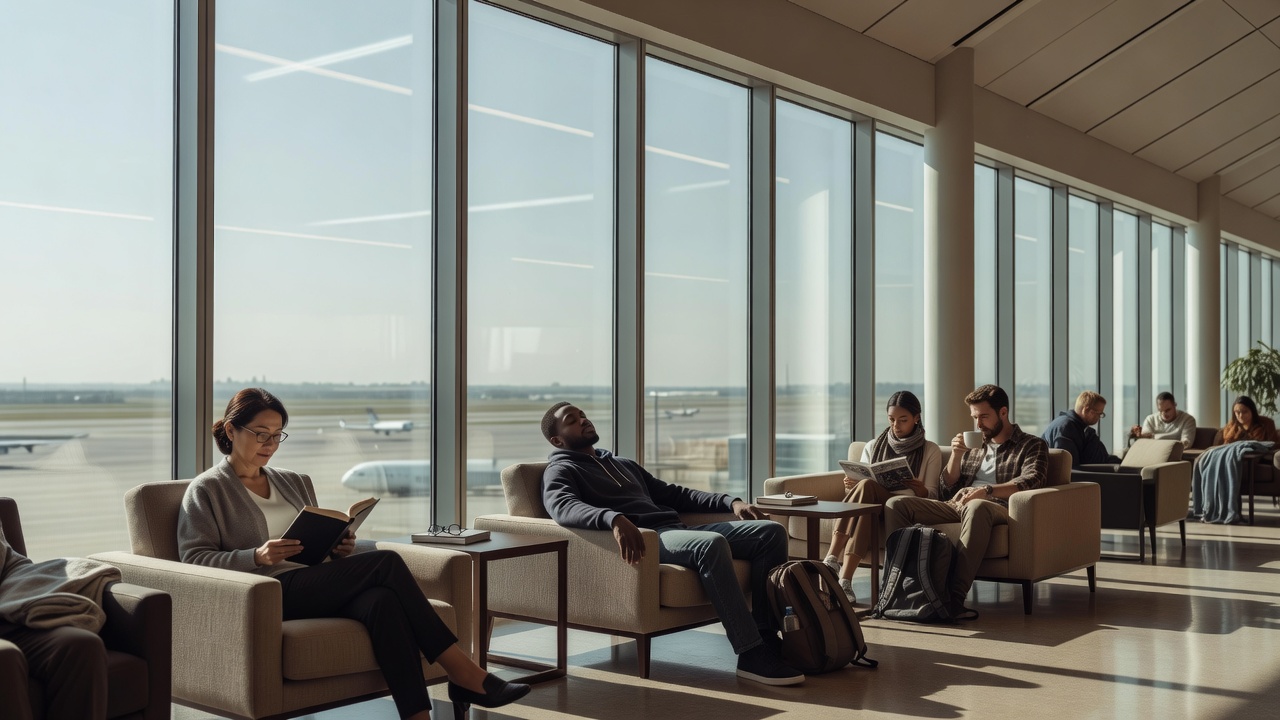
Before specifying stone, timber or a signature chair, observe how people move, pause and seek support. A plan becomes more useful when it responds to passenger intent rather than an abstract image of luxury.
Three priorities: a recognisable welcome, an unobstructed route and clear access to assistance.
Choice in posture, company and sound helps a shared space feel considerate.
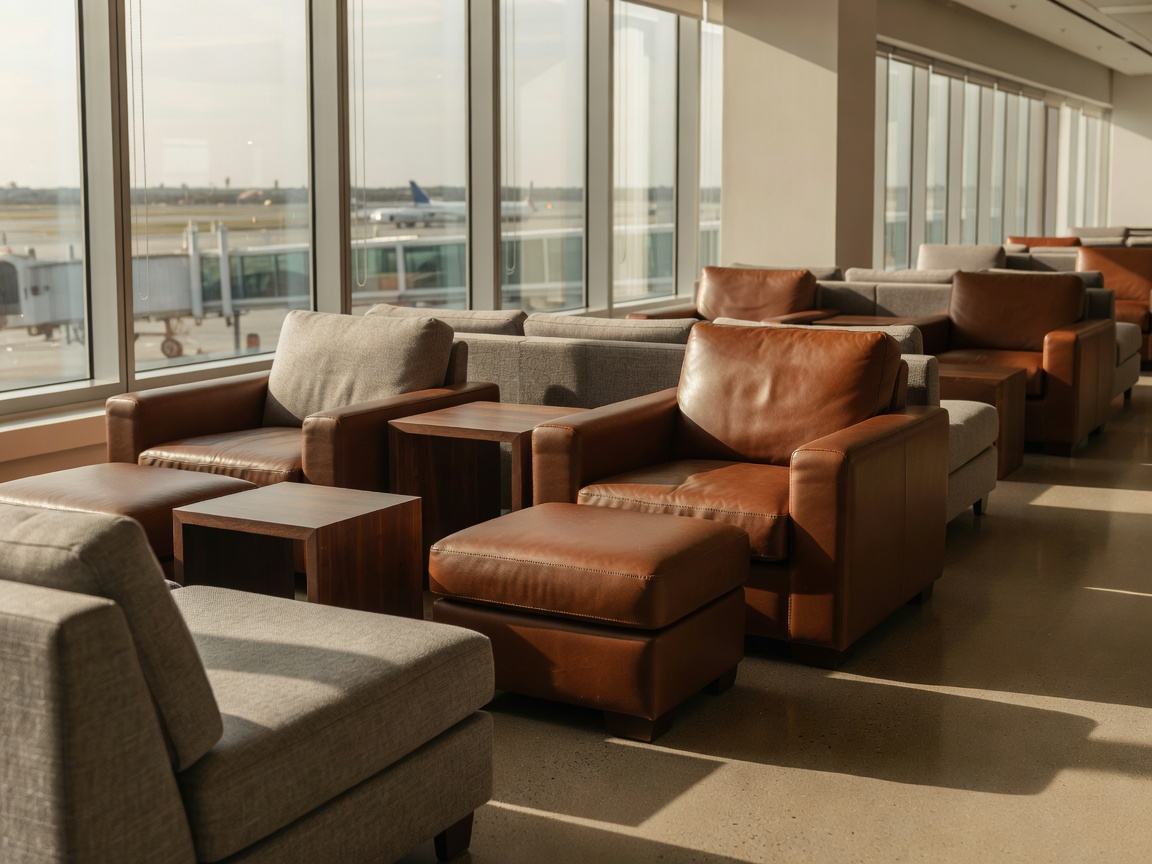
Daylight and robust finishes can work together when glare, cleaning and maintenance are considered early.
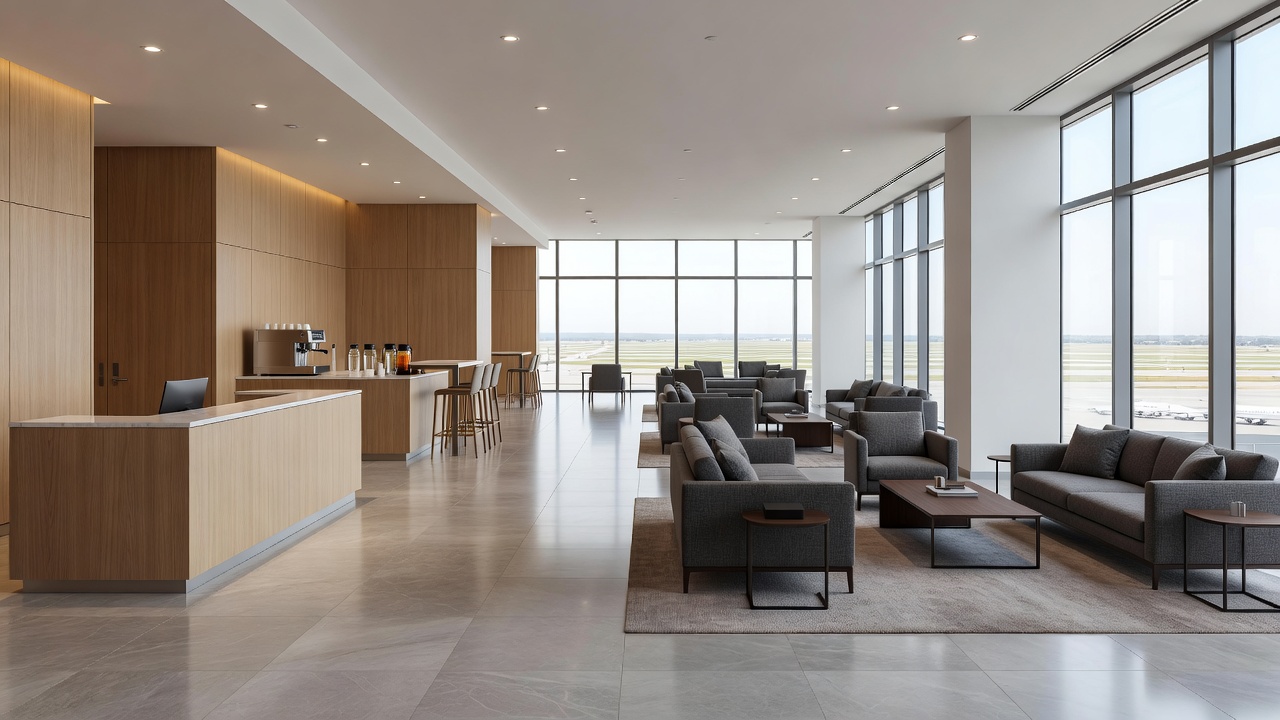
At the threshold, passengers need to understand where to pause, where to continue and where to ask for help. Keep reception visible without making it an obstacle; let onward routes read clearly from the entry.
Explore arrival flow →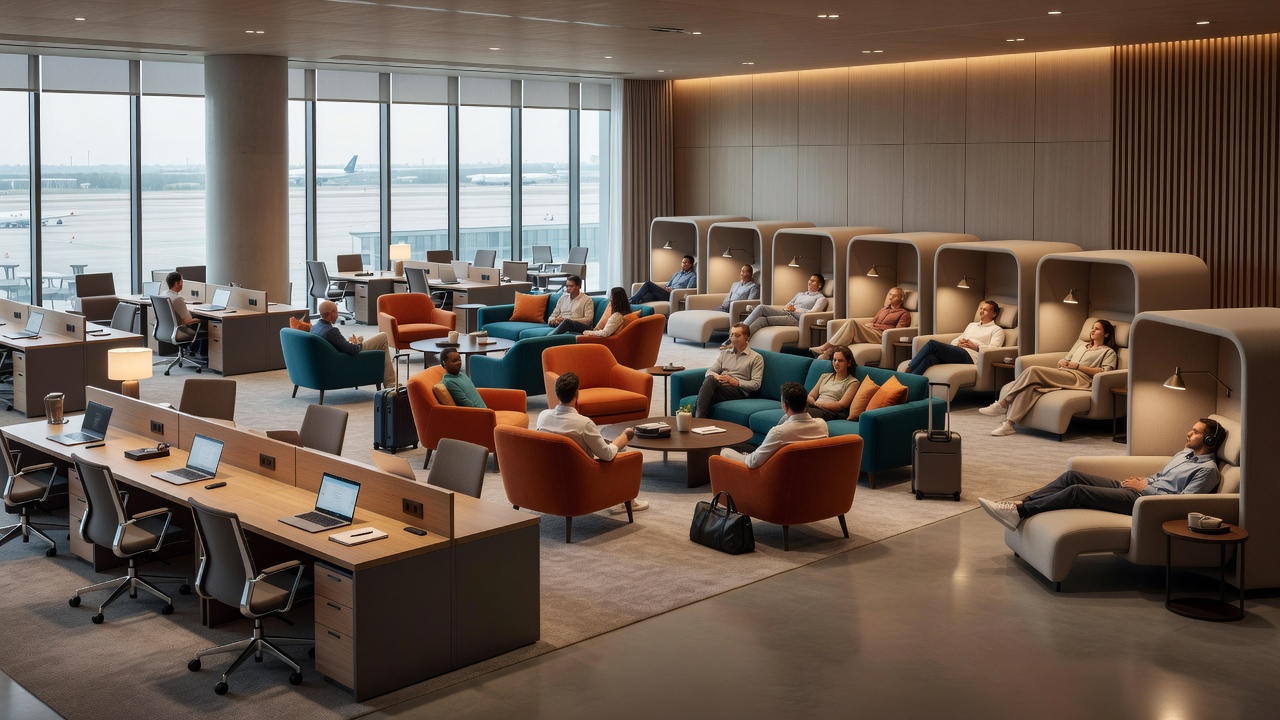
Passengers may be travelling together, preparing for work, caring for children or seeking a quiet pause. A legible mix of settings is more humane than forcing every activity into one open seating field.
Explore seating and acoustics →Treat natural light as a changing condition rather than a decorative feature. Pair it with shaded seating, low-glare task lighting and finishes selected for touch, upkeep and long-term repair.
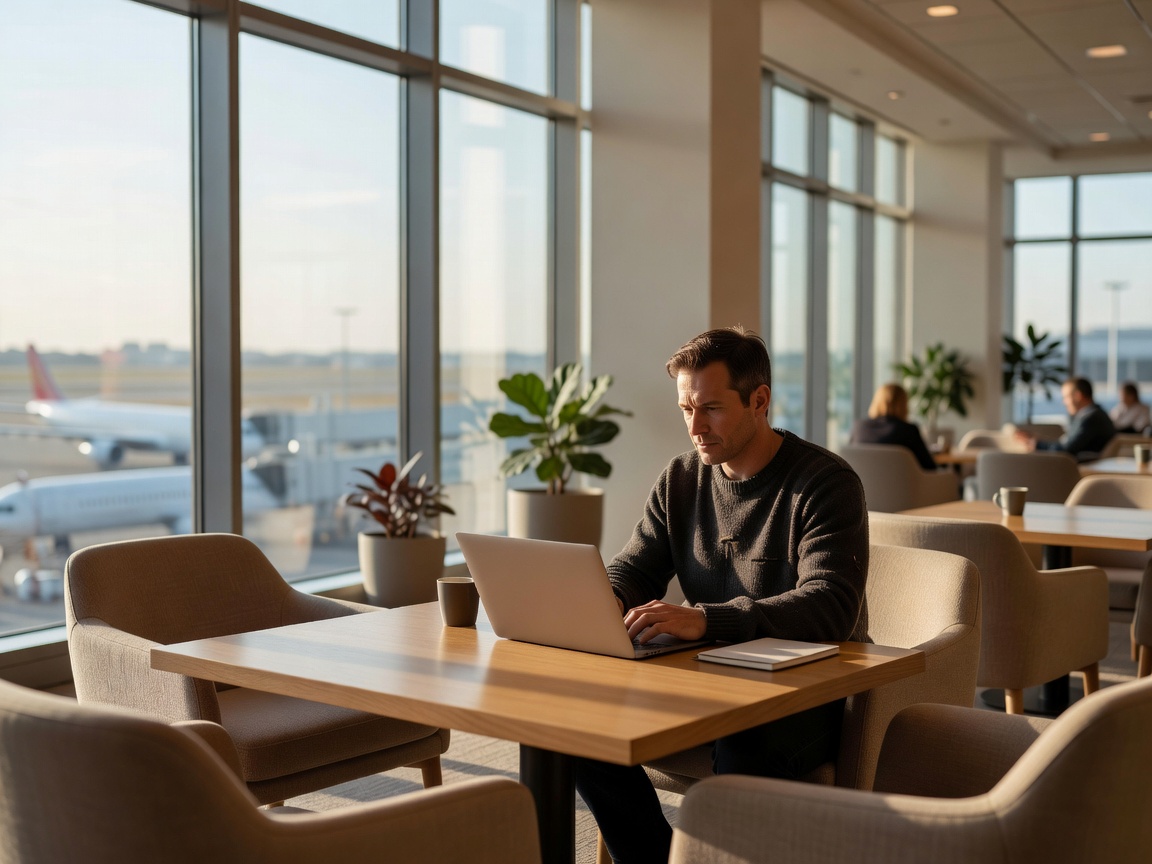
Read the light and materials guide →Dining should be easy to locate and use without turning the whole lounge into a queue. Consider sightlines, return points, water access, replenishment and the needs of guests moving with bags.
Explore dining and amenities →Start with entry, orientation, circulation and operational requirements. Finishes follow the spatial and service decisions.
Yes, when their locations, acoustic character and routes are considered together rather than treated as separate afterthoughts.
Junglereelbiscut is an independent editorial resource for interior designers, airport planners and design-curious travellers. We translate passenger needs into practical spatial questions, distinguish observations from recommendations, and welcome thoughtful corrections and enquiries.
Share a design question